A Lesson in Vulnerability

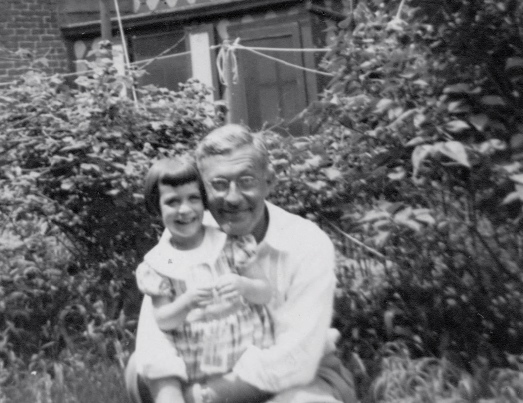
Photo: Daddeo and me, circa 1956, Chicago

I recently gave an interview to NPR for an upcoming podcast on family caregiving. When asked to recall an event connected with my dad’s dementia, what immediately surfaced was the chaotic day I sent him to his room for a time-out, then locked myself in the bathroom for an hour, and cried into a towel – for me, for our family, and for my father, most of all.

Despite being described in my book, The Dutiful Daughter’s Guide to Caregiving, in far more detail, hearing that story spoken aloud made my stomach twist. Would people think me insensitive to my father’s needs? Would they view the telling as disrespectful to his memory? What would they think about an author who writes about dementia and deigns to offer advice?

Lucky for me, I reached out to a good friend and, honking into a Kleenex, asked her to talk me down from the lofty perch I had placed myself. She responded with, “You offered a moment of true vulnerability to listeners and that is scary. Think how it makes others feel, though, to know they’re not alone.”

Her wise words reminded me of something I always tell participants during talks and workshops. It has to do with the profound responsibilities of caregivers, and how we so often expect ourselves to respond flawlessly to every challenge this experience throws at us, even when feeling exhausted and overwhelmed. Cripes – most of the time, we don’t even know what we need to know until it hits us upside the head.

So, here’s my advice whether you’re neck deep in the journey or processing it weeks, months or even years later, like me. Don’t be afraid to say, “I’m not perfect, but I did my best.” When it comes to caregiving, one of the hardest lessons to learn is that we’re only human.

Follow Up: Ultimately, my interview was not used in the NPR podcast, but there are still some very helpful suggestions to be found. Link is:

https://www.npr.org/2019/07/11/740715027/how-to-be-a-better-caregiver-when-a-loved-one-gets-sick
The Facts of Life-A Different Perspective

Dad & Gee

Most kids learn the facts of life from their more well-informed friends or from some vague reference in personal hygiene class. I got my first lesson from a banned British novel.

In my childhood home, shelves groaned under the weight of books celebrating great opera, classic literature, and fine art, while stacks of Scientific American, Mother Jones, and National Geographic vied for space next to heirloom Sabbath candlesticks.

A voracious reader, everything intrigued me, including the backs of cereal boxes, toothpaste tubes, and warnings on household cleaning supplies. My parents used to pay me a penny for every billboard I didn’t read aloud on the family’s four-hour road trips from Orlando to Fort Lauderdale during summer vacations.

One Saturday, having turned boredom into an art form as only a thirteen-year-old can do, I went in search of something new to read while my parents were out buying a new washing machine. Nancy Drew and her penchant for making a mystery out of a molehill had grown stale and all my beloved horse books had been read and reread a dozen times. Exploring the bookcase in my parents’ bedroom, I noticed a copy of Lady Chatterley’s Lover by D. H. Lawrence. While I didn’t know that “first edition” stamped inside its cover gave this book far more value than most, no one had to tell me what the word  “lover” meant. It could only be one thing... sex. And so I sat on the floor of my parents’ room and discovered for myself why Lawrence’s book had maintained its “banned” status for so many years.

Knowing my parents would soon be back, I got busy dog-earring the juiciest pages for a secret return engagement and never heard my father’s footsteps across the terrazzo floor until his wing-tips appeared in the doorway. It took just a few seconds for him to assess the scenethe hole on the shelf where the book should have been and me hunched over speed-reading and pushing horn-rimmed glasses back onto my nose while nervously twirling strands of brown hair between my fingers.

Looking up and seeing my father’s pained expression, I braced myself for a lecture on reading a book that was obviously meant for adults only.

“Judy, it appears your mother and I cannot trust you to be alone in the house without supervision. I am extremely disappointed. How can I make myself clear? NEVER, EVER treat a book in this fashion. Only lazy people with no respect for property consider it acceptable to dog-ear pages. Until I say so, this will go back on the shelf and remain there.”

My father eventually got over the fact that his now sullied copy of Lady Chatterley would no longer be funding his retirement, and I took what occurred as his permission to push the boundaries even further by exploring a collection of writing well beyond my years. Beginning with the bookcases that lined our dining and living room walls, I read works by Herman Wouk, Leon Uris, and Nevil Shute, which taught me about harsh realities, impossible to put aside.

Yet,  some of the most profound lessons have come, not from books, but from being there for people in ways I’ve never imagined; accepting what is, including my imperfections and limitations; offering comfort even when I cannot find it for myself; and realizing that loving invites loss, regardless of how hard we try to hold it at bay. This is a truer definition of the facts of life, and the very stuff of caregiving.

The Art of Gratitude

Layout 1

During the last year of my mother’s life, she was boomeranging between home and late-night trips to the emergency room every other month. This often meant lengthy hospital stays that left her even weaker than before, and every time it happened, I found myself mentally trying to prepare for the end.

During one of my visits, after talking about her art classes which she’d been taking for years, and the latest scoop on my siblings, I took her hand and said, “I love you, and it’s important to me that you get the sendoff you really want, when the time comes. How about if we put our heads together and plan your memorial service?”

She clapped her hands and said, “Oh, that’s a great idea. What should we talk about first?”

So we mapped it out, from the music  (Barbra Streisand songs, including “Second-hand Rose,” since she was a passionate Goodwill shopper, and Klezmer tunes, which she’d grown up with in an orthodox Jewish home) to the food she enjoyed most (deli sandwiches from TooJay’s). With a loud guffaw, she suggested invites that said, “No gifts, necessary,” but lots of balloons. And in typical fashion, she cautioned against anything maudlin or sentimental, just wanting people to tell stories of the good times they’d shared.

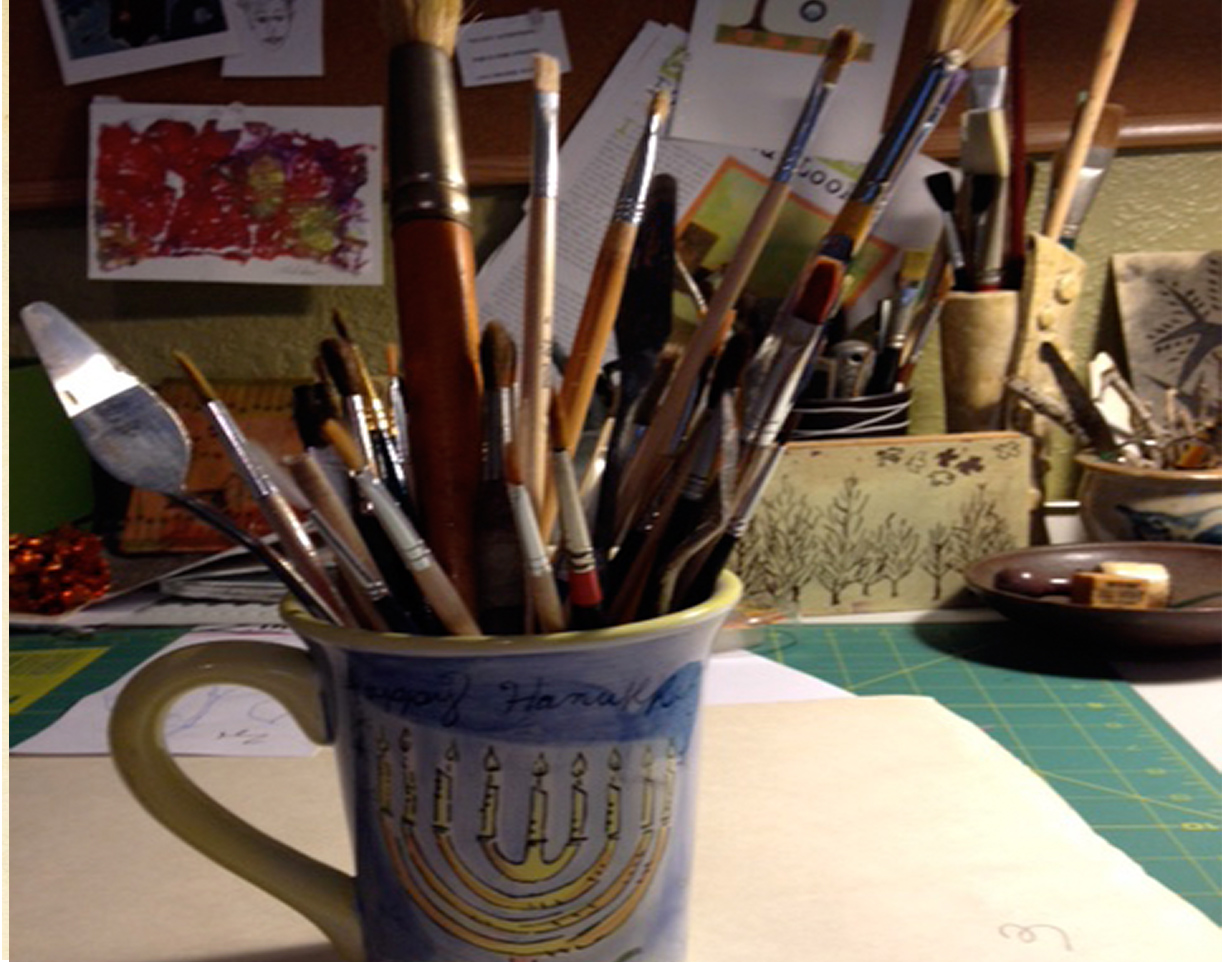
When the time came, it turned out to be the perfect celebration of her life, filled with laughter, tears and memorable moments. As a final tribute, each guest was given one of her well-worn paintbrushes with a small tag attached that read:

In memory of Sally D

May 4, 1922-March 28, 2013

“The essence of all beautiful art is gratitude.” – Nietzsche

—————————-

My mother taught all of us about love, friendship, and the importance of being thankful in our everyday lives. To honor her amazing spirit, why not take a moment to leave a comment acknowledging what you are grateful for. She would have loved that.


Family Caregiver’s Month

cactus

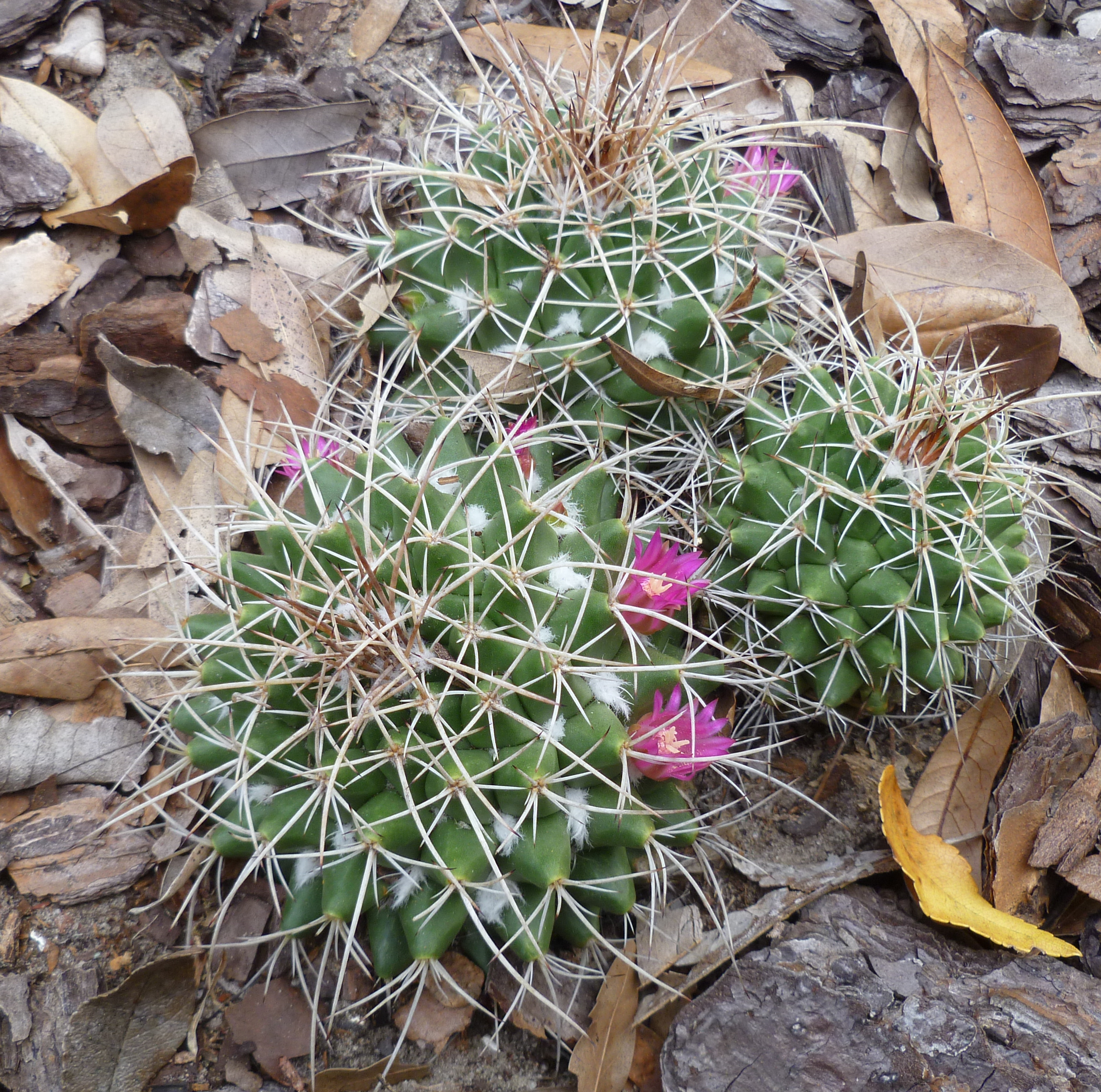
November is National Family Caregiver’s Month. So, why the picture of cactus? Well, I’m a little prickly about the fact that the contributions of caregivers are officially recognized only one month out of twelve. With almost 66 million people in the United States providing care to an ill, disabled or aging family member, it should be year-round.

Since releasing my book a few short months ago, I’ve been privileged to hear the stories of so many people who are caring for moms and dads, children, siblings, spouses and life partners. And regardless of our differences, the common thread that runs through every experience is the capacity for resilience, that ability to cope with stress and adversity that sometimes seems in short supply.

It’s a word I recently asked my caregiver’s writing group to consider. What did the term mean to them? What strengthened their resiliency? What weakened it? How did they find it in themselves or others?

As always, everyone wrote from a different perspective. One person described how resilience is a living, changing thing, and that helping others to be strong enhances your own ability to cope. Another takes her lead from the weeping willow – a tree that survives the years through its ability to bend and move with the wind. For me, it could be found by looking at my tiny sparrow of a mom, 90 years old, and realizing that her body told a tale of resilience more eloquently than words ever could. Despite surgeries, disease, and heartache, she practiced gratitude every single day.

So, my question to you, dear readers, is, “What helps you deal with the difficult challenges of caregiving? Is it the support of other people? Is it strong faith? Is it a beloved family pet you can pour your heart out to? Or maybe its releasing your stress and anxiety on paper.

Leave a comment here, and you’ll be entered into a drawing on November 30th to win an autographed copy of The Dutiful Daughter’s Guide to Caregiving: A Practical Memoir.*

Take good care. You are all, quite simply, amazing.

*Sorry. U.S. deliveries only.