In the closing paragraph of The Dutiful Daughter’s Guide to Caregiving, I say, “…this is what I know to be true. I really am okay. And you will be, too.”

Since writing the book, I’ve been spending more time exploring what “I’m okay” really means. Well, actually, what “I’m better than okay” really means. A lot of it focuses on rediscovering who I am after releasing long-held identities as a caregiver, and (yes, I’m that old) as an employee. Big stuff. BIG stuff.

Of course, this will be different for everyone, but, just like caregiving, there are always common threads that run through the experience. And also just like caregiving, this is a journey made richer by traveling with friends like you who find yourselves on the same road.

So, here’s the plan. We’re going to do some exploring, tap into our creative side, and gather up big handfuls of joy. Along the way, I’ll share my own low-budget journey of self-discovery, art and writing prompts that go deep, inspiring conversations with women just like us, and tons more goodness.

Of course, there’ll still be lots of support and encouragement for those still walking the caregiver path. You are, and always will be, my people. Just think of this as a mini-retreat where we open ourselves up to possibility, and embrace the potential for what comes next.

Should Your Parent Have a DNR?

leaves bench

During the six years I cared for my mom, her trips to the Emergency Room became more frequent. Depending on the issue, the first thing out of my mouth on arrival would sometimes be, “She has a DNR on file, and I have a copy in my purse.” Sometimes, people would look at me strangely or with judgment, because they didn’t understand what was behind those words – that I loved my mother deeply, and she trusted me to make her written instructions known, regardless of how much it hurt.

How fortunate I was that both my mother and father were open to discussing and completing legal papers outlining all their end-of-life decisions, not only a DNR. Particularly during a medical crisis, it removed the burden from my shoulders of having to guess what they wanted.

Until my parents’ health began to decline, my knowledge about this document was limited. It’s clearly a very personal choice – one that should be made with an understanding of the procedures involved and their limitations. Below are answers to common questions that will hopefully aid in making an informed decision.

________________

What is a DNR? DNR stands for Do Not Resuscitate. It states that medical personnel should not perform cardiopulmonary resuscitation (CPR) if a person stops breathing or if their heart stops beating. If no DNR is in place, then any healthcare facility or personnel is legally required to attempt life saving measures.

Why is a DNR so critical? It has to do with the effectiveness of CPR procedures, which can include mouth-to-mouth resuscitation coupled with strong chest compressions, electric shock, inserting a tube into a patient’s mouth or nose to open up airways, and even open-chest heart massage. If someone is already in a compromised state of health due to age and illness, CPR can cause more harm than good. Statistics range, but all point to the fact that as we grow older and typically, more frail, the effectiveness of CPR diminishes in terms of increasing chances of survival or improving quality of life.

Is a DNR part of a Living Will? Just like a Living Will and Health Care Proxy, a DNR is considered a form of Advance Directive. It is, however, a separate document that only relates to the two specific conditions noted earlier – when a person stops breathing or goes into cardiac arrest. Like all Advanced Directives, it should be completed well ahead of a medical emergency.

Where is a DNR obtained? Considered a physician’s order, it’s important to obtain a DNR Order directly from a physician or hospital in the state your parent resides. A DNR is not valid unless signed by both your parent and the doctor. There should also be ample time given for meaningful discussion by everyone concerned, including whoever holds the position of Healthcare Proxy. If, due to illness or injury, a parent is unable to express their wishes concerning a DNR, in most cases, their Healthcare Proxy is permitted to sign instead.

Also, different states require that the form be printed on a specific color of paper prior to being signed. For example, in Florida, DNR’s must be printed on yellow paper. If not, medical personnel can actually opt to ignore this directive.

Is there only one type of DNR? In some states, a DNR that is completed in a hospital or nursing facility is not valid if a person is discharged to home care. In this case, a home DNR should also be completed and clearly placed where it can be seen by medical personnel entering the residence. Some hospitals may even require that this form be completed every time your parent is admitted. Make sure to ask for clarification.

Can a DNR be revoked? Yes, it can be recalled if your parent chooses to do so, but any facility, physician or other individual who has the DNR on file should be notified, and all existing copies destroyed.

______________

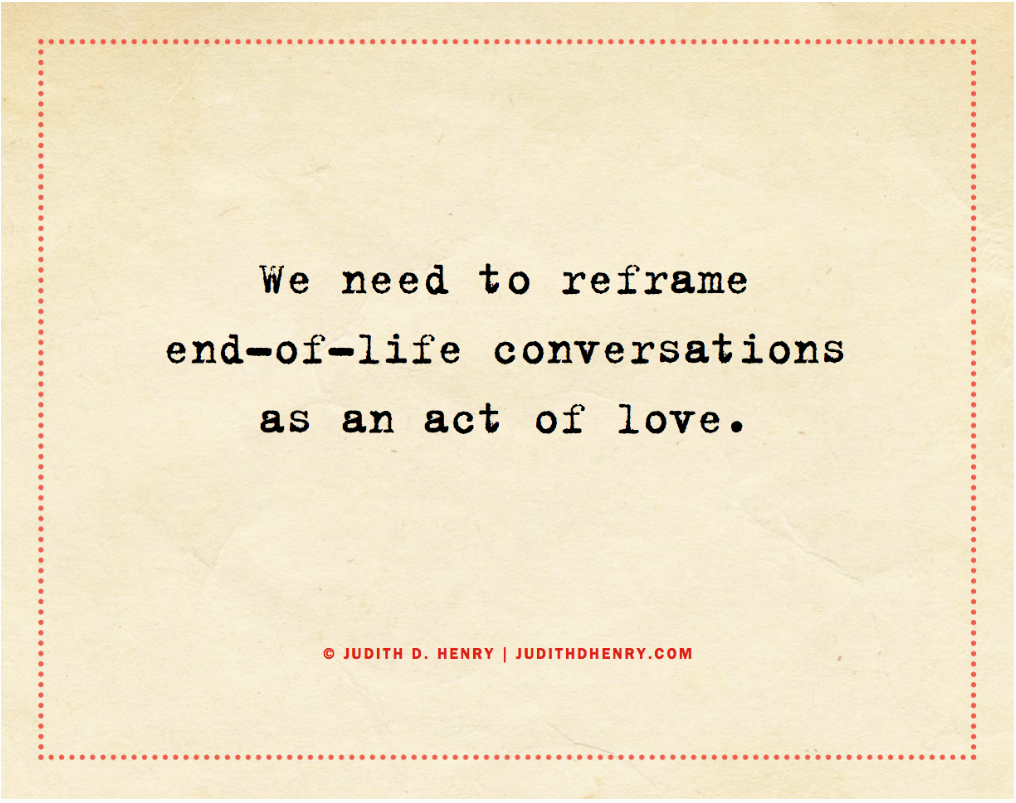
There’s no question that bringing up the subject of end-of-life choices, in general, is one of the most intimate and important talks we can initiate as family caregivers, and likely the hardest. Yet, the reality is that honoring a parent’s wishes may well be the most profound gift we can give them, and in doing so, find some measure of comfort for ourselves.

Speaking Up

speaker

Awhile back I invited my writer’s group to compose a letter to people they interact with who are not caregivers themselves. To say the flood gates opened with this assignment would be an understatement.

Responses included:

The son or daughter who never calls, or who only calls to tell you about their problems. Or maybe they rarely visit, or never ask how you or your spouse is doing?

The busy sibling who has no time to help, yet is always happy to criticize your caregiving efforts.

Numerous acquaintances who use that well-worn phrase “Let me know if you need anything,” as a sign-off to every conversation, and that’s where it stops.

The well-meaning friend who comments on how worn out you look, just when you were feeling pretty good.

The doctors who act like you and your parents are working for them, and not the other way around.

It’s clear this particular prompt struck such a nerve, and in all instances the group remarked that they stifled their responses for fear of being labeled a complainer, a troublemaker, or a bitch. I get that keeping quiet can sometimes be the better plan, but, there are many instances where we’ve simply got to speak up, because remaining silent only reinforces a status quo which is hurtful to those we love, and to ourselves.

Here are a few excerpts from my own letter, written to some of the physicians involved in my parents’ care over the course of six years. This isn’t an indictment of all doctors, for some were compassionate, generous with their time, and truly seemed to understand the challenges faced by my parents, and me as their advocate. For the record, I gladly wore the labels noted above and did share a few of these comments with healthcare personnel.

______________

Dear Medical Professional,

Before we begin, please fill out this ten page form of very tiny type, documenting your qualifications. Already completed this for the last caregiver? Sorry, I’ll need you to do it all over again. You’ve been waiting to see me for an hour? Well, everyone knows that a 9 o’clock appointment really means 10.

Do not automatically assume that all patients in their late 80’s have no capacity to understand what you’re telling them. Also, be prepared to answer a list of questions about side effects, expectations of recovery, etc. after you propose a risky surgery or procedure. Never use the enticement, “You’re not paying for this. It’s covered by Medicare.” Where do you think Medicare gets their money?

Please refer to elderly patients as Mr. or Ms. or Mrs. and not by their first names, or as the UTI or cardiac cath in room 202. Surviving this country’s health care system thus far, entitles them to a great deal of respect, and you are treating a person, not a condition.

Stop saying, “How are we doing?” when a caregiver and her parent finally get to see you after sitting for two hours. WE are pretty damn tired of late night trips to the ER. How are you?

Don’t look at a caregiver and say, “You need to do such and such,” as if this person has been hanging out on the couch eating bonbons and watching soap operas, all this time. Instead, look her in the eye and ask, “And how are you holding up?”

The next time a nurse brings an elderly patient the two Tylenol you prescribed for pain due to a pelvic fracture, don’t get all huffy when the daughter/caregiver raises hell and demands to speak with another hospitalist. Prescribing opiates may not be your first choice, so do your research, or call in a pain management specialist. Just don’t minimize that patient’s distress.

To close, I get that you work long and demanding hours. As a caregiver, so do I. Maybe we can work together as a team to change things in this broken healthcare system of ours. Please accept these suggestions as a token of my commitment to this worthy goal. The next batch of suggestions will be accompanied by a bill for consulting services rendered. Payment will be due within 30 days, and FYI, I don’t accept insurance.

Respectfully,

Judith Henry

______________

Readers, if you’re game to give this exercise a try, pen your own letter to someone, and look closely at what you’ve written. Like the members in our writing group, you may feel a sense of relief just getting these unspoken words out of your head and onto paper. But think for a minute – is there a way to present your thoughts constructively to the person you’re writing to?  For example, instead of automatically saying, “I’m fine” to the adult kid who calls with a cursory “how are you?” be honest. To the physician who barrels in with a treatment or surgery, assuming your parent (or you) will acquiesce quietly, explain you have a list of questions prepared to be answered first.  When someone tells you, “Let me know if I can do anything,” don’t just say ok. Tell them what they can do to help, and be specific.

You never know. Your words may just start changing things for the better.


Ten Things I Learned From Caregiving

P1000032

Not being a rainbow and pink unicorn kind of gal, I have to applaud the honesty of Ann Brenoff’s recent piece on HuffPost entitled, “No, Caregiving is Not Rewarding. It Simply Sucks.”  There isn’t a caregiver alive who can’t identify with that kind of bone-deep exhaustion, anger, and frustration.

Let’s face it, if given a choice, we’d rather the people we love remain healthy and vital forever, making this role unnecessary. But, that’s not how it happens, which brings me to the point of writing this piece.

As a family caregiver and working daughter, juggling the demands of a father with dementia and a mother with breast cancer and heart disease, there were often days I questioned my sanity, and ability to keep on. I fantasized about getting my real life back, then instantly felt guilty knowing what that would mean. I was doing too much. I wasn’t doing enough. Compassion fatigue, fractured family dynamics, and issues with paid caregivers often  stressed me to the max, and every ring of my cell phone triggered a fight or flight response.

Yeah, a lot of it did suck, but there were also moments of clarity, purpose, and deep connection that might never have happened without the accompanying angst.

This is what I know, for sure.

1. I believe in kindness, but don’t mess with me when my parent’s well-being is at stake.

2. Digesting large amounts of medical information quickly? No problem. Hospital food?           That’s another story.

3. Forgive the woo-woo, but part of my purpose for being here was to care for my folks.

4. Not really a crier, the kindness of a stranger can still disarm me, every time.

5. After six years as my parent’s healthcare advocate, there isn’t much that intimidates me.

6. At the end, our deepest conversations can have little to do with words.

7. Just being with my folks was sometimes more important than doing for them.

8. Whether giving or receiving care, we all have a deep need to be understood and                      appreciated.

9. Laughter and tears can both be ways of dealing with loss.

10. You can ultimately see caregiving as a gift, and still want to return it now and then.

Now you know mine. How about sharing a few of your own caregiving truths.

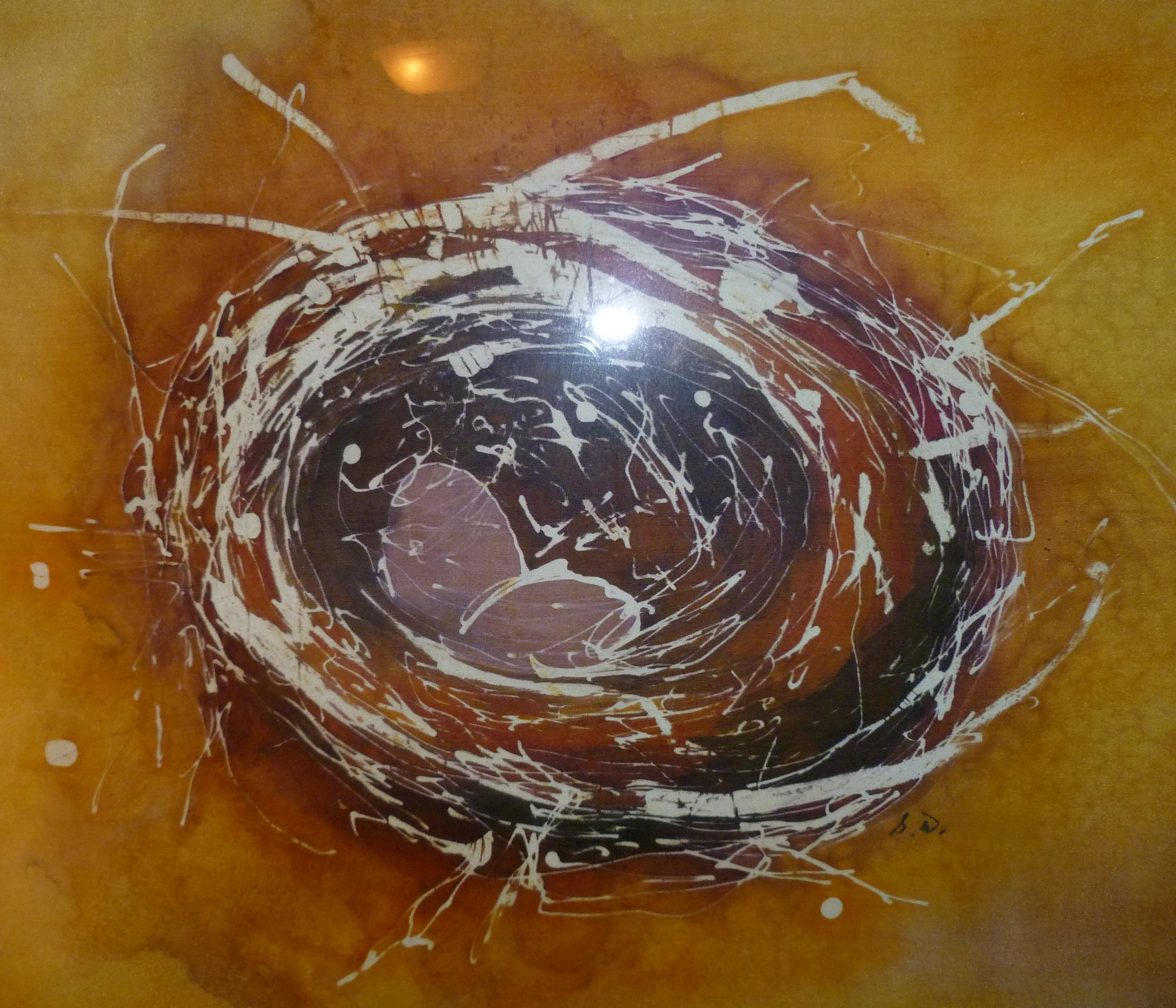
And by the way, the bird’s nest in this post is a treasured batik, created by my mom, Sally, many years ago.

The Facts of Life-A Different Perspective

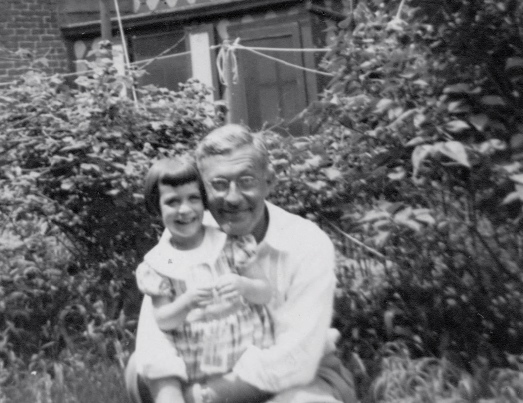
Dad & Gee

Most kids learn the facts of life from their more well-informed friends or from some vague reference in personal hygiene class. I got my first lesson from a banned British novel.

In my childhood home, shelves groaned under the weight of books celebrating great opera, classic literature, and fine art, while stacks of Scientific American, Mother Jones, and National Geographic vied for space next to heirloom Sabbath candlesticks.

A voracious reader, everything intrigued me, including the backs of cereal boxes, toothpaste tubes, and warnings on household cleaning supplies. My parents used to pay me a penny for every billboard I didn’t read aloud on the family’s four-hour road trips from Orlando to Fort Lauderdale during summer vacations.

One Saturday, having turned boredom into an art form as only a thirteen-year-old can do, I went in search of something new to read while my parents were out buying a new washing machine. Nancy Drew and her penchant for making a mystery out of a molehill had grown stale and all my beloved horse books had been read and reread a dozen times. Exploring the bookcase in my parents’ bedroom, I noticed a copy of Lady Chatterley’s Lover by D. H. Lawrence. While I didn’t know that “first edition” stamped inside its cover gave this book far more value than most, no one had to tell me what the word  “lover” meant. It could only be one thing... sex. And so I sat on the floor of my parents’ room and discovered for myself why Lawrence’s book had maintained its “banned” status for so many years.

Knowing my parents would soon be back, I got busy dog-earring the juiciest pages for a secret return engagement and never heard my father’s footsteps across the terrazzo floor until his wing-tips appeared in the doorway. It took just a few seconds for him to assess the scenethe hole on the shelf where the book should have been and me hunched over speed-reading and pushing horn-rimmed glasses back onto my nose while nervously twirling strands of brown hair between my fingers.

Looking up and seeing my father’s pained expression, I braced myself for a lecture on reading a book that was obviously meant for adults only.

“Judy, it appears your mother and I cannot trust you to be alone in the house without supervision. I am extremely disappointed. How can I make myself clear? NEVER, EVER treat a book in this fashion. Only lazy people with no respect for property consider it acceptable to dog-ear pages. Until I say so, this will go back on the shelf and remain there.”

My father eventually got over the fact that his now sullied copy of Lady Chatterley would no longer be funding his retirement, and I took what occurred as his permission to push the boundaries even further by exploring a collection of writing well beyond my years. Beginning with the bookcases that lined our dining and living room walls, I read works by Herman Wouk, Leon Uris, and Nevil Shute, which taught me about harsh realities, impossible to put aside.

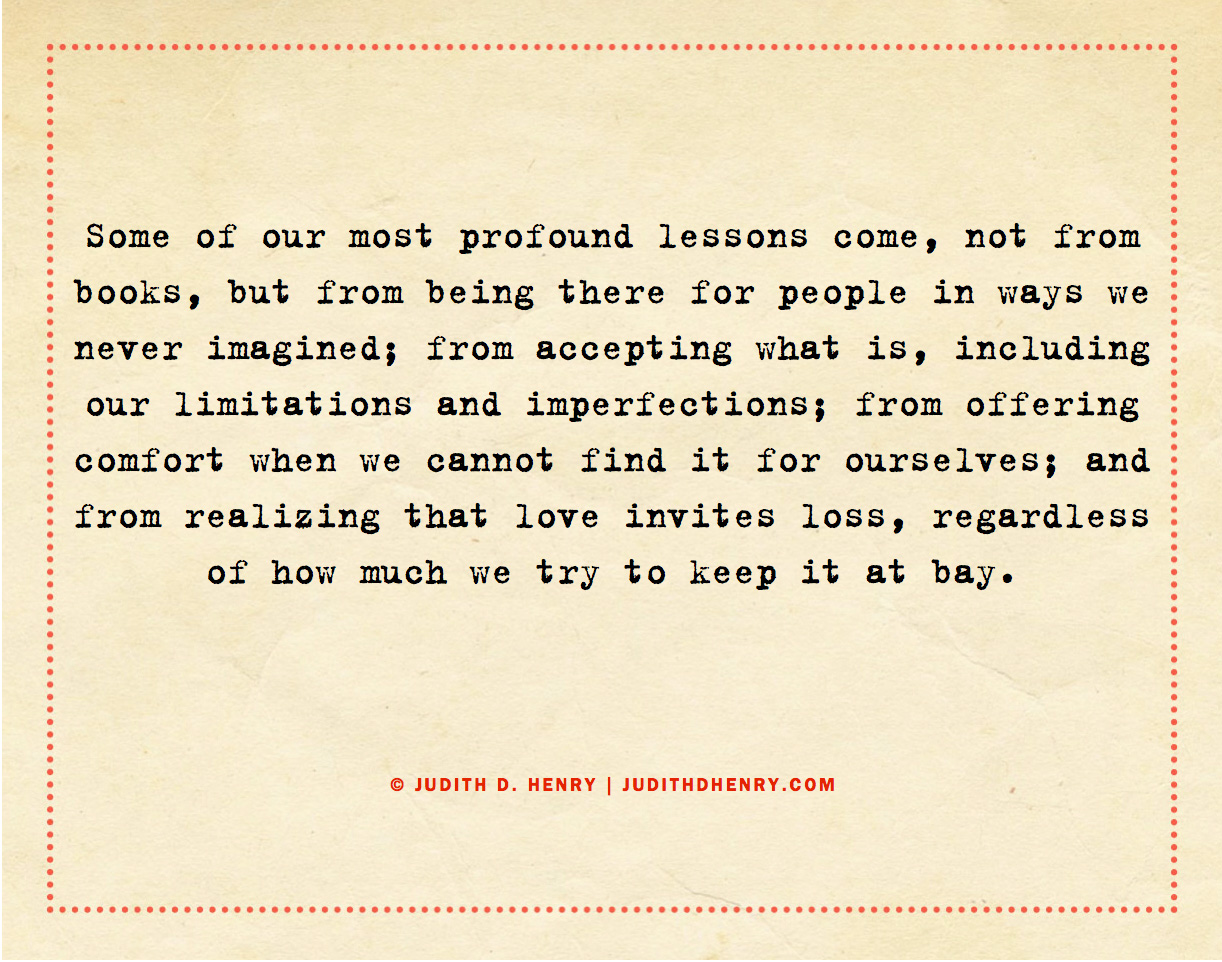
Yet,  some of the most profound lessons have come, not from books, but from being there for people in ways I’ve never imagined; accepting what is, including my imperfections and limitations; offering comfort even when I cannot find it for myself; and realizing that loving invites loss, regardless of how hard we try to hold it at bay. This is a truer definition of the facts of life, and the very stuff of caregiving.

Are you the bug, or the windshield, today?

worn old truck gratis

As the Mary Chapin-Carpenter song goes, “Sometimes you’re the windshield. Sometimes you’re the bug.” While there’s simply no way to steer clear of the many challenges this caregiving journey brings, we can learn so much from them. Here are just a few things I discovered along the way.

In addition to constantly multi-tasking, you’re also dealing with a multitude of conflicting emotions. Caregiving is damn hard work, and if you don’t explode once in awhile, someone needs to take your pulse. Give yourself permission to feel what you feel, without judgement. Sit down with a cup of hot tea or a glass of wine, grab a journal, and write it out.  Venting on paper offers an opportunity to safely process all that we’re going through, and the realizations that are often unearthed can be very powerful.

When the planets align and things go according to plan, that’s usually due to one person who’s willing to go the extra mile (in addition to you, of course). Maybe it’s the doctor’s receptionist who slides your dad in for an appointment on a day you can be there; or the nurse’s aide at your mom’s rehab facility who always treats her with such respect. To acknowledge such kindness, I maintain a stash of thank you cards and inexpensive gifts like pretty notepads, hand-made soaps from a local artisan, $5 gift cards from Starbucks. Small gestures like this can can have a big impact, because they’re so unexpected. The caveat is that you have to do it for yourself, as well. For me, a small reward was heading to a favorite thrift store for a $3 treasure, or 15 minutes of quiet with a good cup of coffee from my favorite cafe.

Reach out to a support group, either close to home or online. You may think you don’t need this, but the reality is that caregiving takes a village. Isolation is a very real concern that can affect your mental and physical health. These communities are a way to make friends, receive support and encouragement, and gather helpful strategies from people who are living the tough stuff every day. Many focus on special needs like caring for a loved one with dementia (check out Brenda Avadian’s site, The Caregiver’s Voice), or working daughters caring for aging parents (Liz O’Donnell of WorkingDaughter.com has a site that offers great advice and support, and a FaceBook group that offers the same.)

Accept help early on, while people are most likely to offer, even if you think everything’s under control. The reality is that the longer you go on doing it all yourself, the less people tend to believe you need assistance. Be specific. Maybe it’s asking someone to bring a meal; or having a friend sit with the family member you’re caring for, so you can take a break for a few hours. Make a list that includes daily, weekly or monthly chores that others can perform, and when someone says, “Let me know if there’s anything I can do” be ready with, “Well, actually there is. How about……” Believe me, this points out who you can count on pretty quick.

Maintaining a sense of humor while caregiving isn’t a luxury. It’s a necessity. Laughter, even the dark kind, allows your body to relax during stressful times. But, did you know it can also keep you from being crushed by emotion? It saved me countless times, especially the last day I spent with my father at the hospital, simply holding his hand. When the nurse asked if I wanted someone from the clergy to visit, I asked for a rabbi. As he entered the room, I couldn’t help thinking that he didn’t look like a member of my tribe. Reading my mind, this lovely man said, with an apologetic smile, “I’m not Jewish, but will an Episcopalian do?” In that instant, I laughed. Not a nervous titter, but a loud, life-affirming sound that provided me with what I needed most – release and relief.

I once read that, “If only” is the saddest phrase in the English language. Don’t become a prisoner of regret after a parent is gone. Be generous now with some simple, yet powerful phrases. “I love you.” Thank you. I forgive you. Please forgive me.” You would be amazed at their ability to bring about positive change in a relationship. A great book on this subject is Ira Byock’s, The Four Things That Matter Most.”

What I continue to realize is that we are all in this together, and sharing our experiences is how we begin to change things for the better. Why not take a minute and offer up some of your own hard-earned wisdom?

Planning Mom’s Funeral with Barbra Streisand’s Help

P1000097_2

In the last year of my mother’s life, she was boomeranging between home and late-night trips to the emergency room every other month. This often meant lengthy hospital stays that left her even weaker than before. Every time it happened, I found myself mentally trying to prepare for the end. Her end. And there were so many things I still wanted to say and ask.

During one of my hospital visits with her, as we’re discussing how much she misses her art classes and how my younger siblings are doing, I decide to broach a topic that has been weighing on my mind lately.

“Mom, I love you, and it’s important to me that you get the send-off you really want, when the time comes. How about if we put our heads together and plan your funeral?”

She claps her hands and says, “Oh, that’s a great idea. What should we talk about first?”

This was one of the many things I loved about my mother — her practical nature; plus, the fact that we shared the same preference in curse words.

She wants to be cremated like my father, but we’ve never discussed where she wants her ashes scattered. Was it in the same place as his — the canal behind the house they’d lived in for 50 years?

“No, no. Don’t dump me in the water. I can’t swim,” she says in all seriousness.

“I want to be scattered over the nearest Stein Mart,” I say with a straight face. “How does that sound?” We were the discount queens, she and I.

Laughing and shaking her head, she says, “I want to be close to you. How about sprinkling me in your backyard in Tampa? Would that freak you out?”

I don’t even hesitate. “Fine with me.” I’m already imagining the perfect spot underneath my papaya tree, strung with wind chimes and bird feeders.

Already knowing the answer, I then ask, “So, do you want a traditional service or do you want a kick-ass goodbye party?”

“No schmaltzy, depressing stuff,” she replies. “I like the idea of friends and family just coming together to share the good times we had. Let’s do a party with invitations.”

Her right hand, the long elegant fingers now bruised and crooked with arthritis, trace invisible text in the air. “‘Come celebrate a joyous life.’ Oh, and put ‘no gifts necessary.’” She guffaws loudly. It’s a hopeful sound to me, and for just a second I forget how weak she’s become.

We agree that the perfect place to hold her bash is the Beardall Senior Center, where she’d been taking art classes for years. She has made dear friends there who continue to call and visit when she’s unable to attend.

“What about music?” I ask. “I’m thinking a combination of Klezmer and Barbra Streisand. I know those are your favorites.” She loves that idea and her imagination and sense of humor take off. “Oh, yes. Let’s do Bab’s version of ‘Happy Days Are Here Again.’” And we howl with laughter.

We come up with a few more Streisand songs including “Someone to Watch Over Me,” “Here’s to Life,” and “Second Hand Rose” since Mom is such a dedicated Goodwill shopper.

“I want balloons and good food. Let’s get TooJay’s to cater it.” They were the closest thing to a deli in Orlando and her favorite place for a kosher hot dog or pastrami sandwich.

“I wonder what your brother and sister would think if they knew you and I were planning my funeral?” She gives me a sly co-conspirator’s smile. My mother loves all her children, but she and I are bound by the secrets she’s told me over the years.

While we’re making more arrangements, my mother’s day nurse, Anne, who looks like she’s twelve, comes into the room. “We’re planning a party,” my mother tells her, and I know what’s about to happen.

“Oh, what’s the occasion?” Anne chirps, walking into the trap. My mother delivers the punch line with the skill of a borscht-belt comic. “My funeral!” she says. Buh dum bum.

Anne’s perfect features scrunch into a look that says, “Oh, shit, they didn’t tell me how to handle this in nursing school,” and she turns to me for help. I shake my head. She’s on her own.

My mother shares the party details and tells her in a no-nonsense tone, “It’s important to let your family know what your wishes are. After all, it’s your funeral,” and laughs at her own joke.

“What a good idea,” Anne fibs politely, backing out of the room. We know she’s headed towards the nurses’ station to tell everyone about the crazy lady and her daughter down the hall. We don’t care.

By now my mother is looking better, with more color in her cheeks. She reminds me of a tiny sparrow sitting up in that bed and suddenly the enormity of it all bears down on me and I want to go home. It’s time to wrap this up for now, say goodbye, and drive back to Tampa while I can still keep my eyes open. Leaving is always a push/pull.

Seeing the struggle on my face, she smiles and says, “You did good,” and tells me how happy she is with the arrangements we’ve made. I take a deep breath and give myself permission to leave, and finally, to grieve.