An Act of Love and Laughter

If you’re familiar with my book, The Dutiful Daughter’s Guide to Caregiving, you’ve probably read the chapter called, Planning Mom’s Funeral With Barbra Streisand’s Help. My blog post of the same name touched a cord with caregivers everywhere and has been shared numerous times, and posted on other blogs, since the book came out in 2015.

I was recently invited to record an audio version of that story as a service of our public library system. It’s just a few minutes long, and, as I state in the introduction, it was my way of initiating a difficult conversation by reframing it as an act of love and laughter.

I hope you enjoy it.

Should Your Parent Have a DNR?

leaves bench

During the six years I cared for my mom, her trips to the Emergency Room became more frequent. Depending on the issue, the first thing out of my mouth on arrival would sometimes be, “She has a DNR on file, and I have a copy in my purse.” Sometimes, people would look at me strangely or with judgment, because they didn’t understand what was behind those words – that I loved my mother deeply, and she trusted me to make her written instructions known, regardless of how much it hurt.

How fortunate I was that both my mother and father were open to discussing and completing legal papers outlining all their end-of-life decisions, not only a DNR. Particularly during a medical crisis, it removed the burden from my shoulders of having to guess what they wanted.

Until my parents’ health began to decline, my knowledge about this document was limited. It’s clearly a very personal choice – one that should be made with an understanding of the procedures involved and their limitations. Below are answers to common questions that will hopefully aid in making an informed decision.

________________

What is a DNR? DNR stands for Do Not Resuscitate. It states that medical personnel should not perform cardiopulmonary resuscitation (CPR) if a person stops breathing or if their heart stops beating. If no DNR is in place, then any healthcare facility or personnel is legally required to attempt life saving measures.

Why is a DNR so critical? It has to do with the effectiveness of CPR procedures, which can include mouth-to-mouth resuscitation coupled with strong chest compressions, electric shock, inserting a tube into a patient’s mouth or nose to open up airways, and even open-chest heart massage. If someone is already in a compromised state of health due to age and illness, CPR can cause more harm than good. Statistics range, but all point to the fact that as we grow older and typically, more frail, the effectiveness of CPR diminishes in terms of increasing chances of survival or improving quality of life.

Is a DNR part of a Living Will? Just like a Living Will and Health Care Proxy, a DNR is considered a form of Advance Directive. It is, however, a separate document that only relates to the two specific conditions noted earlier – when a person stops breathing or goes into cardiac arrest. Like all Advanced Directives, it should be completed well ahead of a medical emergency.

Where is a DNR obtained? Considered a physician’s order, it’s important to obtain a DNR Order directly from a physician or hospital in the state your parent resides. A DNR is not valid unless signed by both your parent and the doctor. There should also be ample time given for meaningful discussion by everyone concerned, including whoever holds the position of Healthcare Proxy. If, due to illness or injury, a parent is unable to express their wishes concerning a DNR, in most cases, their Healthcare Proxy is permitted to sign instead.

Also, different states require that the form be printed on a specific color of paper prior to being signed. For example, in Florida, DNR’s must be printed on yellow paper. If not, medical personnel can actually opt to ignore this directive.

Is there only one type of DNR? In some states, a DNR that is completed in a hospital or nursing facility is not valid if a person is discharged to home care. In this case, a home DNR should also be completed and clearly placed where it can be seen by medical personnel entering the residence. Some hospitals may even require that this form be completed every time your parent is admitted. Make sure to ask for clarification.

Can a DNR be revoked? Yes, it can be recalled if your parent chooses to do so, but any facility, physician or other individual who has the DNR on file should be notified, and all existing copies destroyed.

______________

There’s no question that bringing up the subject of end-of-life choices, in general, is one of the most intimate and important talks we can initiate as family caregivers, and likely the hardest. Yet, the reality is that honoring a parent’s wishes may well be the most profound gift we can give them, and in doing so, find some measure of comfort for ourselves.

Planning Mom’s Funeral with Barbra Streisand’s Help

P1000097_2

In the last year of my mother’s life, she was boomeranging between home and late-night trips to the emergency room every other month. This often meant lengthy hospital stays that left her even weaker than before. Every time it happened, I found myself mentally trying to prepare for the end. Her end. And there were so many things I still wanted to say and ask.

During one of my hospital visits with her, as we’re discussing how much she misses her art classes and how my younger siblings are doing, I decide to broach a topic that has been weighing on my mind lately.

“Mom, I love you, and it’s important to me that you get the send-off you really want, when the time comes. How about if we put our heads together and plan your funeral?”

She claps her hands and says, “Oh, that’s a great idea. What should we talk about first?”

This was one of the many things I loved about my mother — her practical nature; plus, the fact that we shared the same preference in curse words.

She wants to be cremated like my father, but we’ve never discussed where she wants her ashes scattered. Was it in the same place as his — the canal behind the house they’d lived in for 50 years?

“No, no. Don’t dump me in the water. I can’t swim,” she says in all seriousness.

“I want to be scattered over the nearest Stein Mart,” I say with a straight face. “How does that sound?” We were the discount queens, she and I.

Laughing and shaking her head, she says, “I want to be close to you. How about sprinkling me in your backyard in Tampa? Would that freak you out?”

I don’t even hesitate. “Fine with me.” I’m already imagining the perfect spot underneath my papaya tree, strung with wind chimes and bird feeders.

Already knowing the answer, I then ask, “So, do you want a traditional service or do you want a kick-ass goodbye party?”

“No schmaltzy, depressing stuff,” she replies. “I like the idea of friends and family just coming together to share the good times we had. Let’s do a party with invitations.”

Her right hand, the long elegant fingers now bruised and crooked with arthritis, trace invisible text in the air. “‘Come celebrate a joyous life.’ Oh, and put ‘no gifts necessary.’” She guffaws loudly. It’s a hopeful sound to me, and for just a second I forget how weak she’s become.

We agree that the perfect place to hold her bash is the Beardall Senior Center, where she’d been taking art classes for years. She has made dear friends there who continue to call and visit when she’s unable to attend.

“What about music?” I ask. “I’m thinking a combination of Klezmer and Barbra Streisand. I know those are your favorites.” She loves that idea and her imagination and sense of humor take off. “Oh, yes. Let’s do Bab’s version of ‘Happy Days Are Here Again.’” And we howl with laughter.

We come up with a few more Streisand songs including “Someone to Watch Over Me,” “Here’s to Life,” and “Second Hand Rose” since Mom is such a dedicated Goodwill shopper.

“I want balloons and good food. Let’s get TooJay’s to cater it.” They were the closest thing to a deli in Orlando and her favorite place for a kosher hot dog or pastrami sandwich.

“I wonder what your brother and sister would think if they knew you and I were planning my funeral?” She gives me a sly co-conspirator’s smile. My mother loves all her children, but she and I are bound by the secrets she’s told me over the years.

While we’re making more arrangements, my mother’s day nurse, Anne, who looks like she’s twelve, comes into the room. “We’re planning a party,” my mother tells her, and I know what’s about to happen.

“Oh, what’s the occasion?” Anne chirps, walking into the trap. My mother delivers the punch line with the skill of a borscht-belt comic. “My funeral!” she says. Buh dum bum.

Anne’s perfect features scrunch into a look that says, “Oh, shit, they didn’t tell me how to handle this in nursing school,” and she turns to me for help. I shake my head. She’s on her own.

My mother shares the party details and tells her in a no-nonsense tone, “It’s important to let your family know what your wishes are. After all, it’s your funeral,” and laughs at her own joke.

“What a good idea,” Anne fibs politely, backing out of the room. We know she’s headed towards the nurses’ station to tell everyone about the crazy lady and her daughter down the hall. We don’t care.

By now my mother is looking better, with more color in her cheeks. She reminds me of a tiny sparrow sitting up in that bed and suddenly the enormity of it all bears down on me and I want to go home. It’s time to wrap this up for now, say goodbye, and drive back to Tampa while I can still keep my eyes open. Leaving is always a push/pull.

Seeing the struggle on my face, she smiles and says, “You did good,” and tells me how happy she is with the arrangements we’ve made. I take a deep breath and give myself permission to leave, and finally, to grieve.

The Art of Gratitude

Layout 1

During the last year of my mother’s life, she was boomeranging between home and late-night trips to the emergency room every other month. This often meant lengthy hospital stays that left her even weaker than before, and every time it happened, I found myself mentally trying to prepare for the end.

During one of my visits, after talking about her art classes which she’d been taking for years, and the latest scoop on my siblings, I took her hand and said, “I love you, and it’s important to me that you get the sendoff you really want, when the time comes. How about if we put our heads together and plan your memorial service?”

She clapped her hands and said, “Oh, that’s a great idea. What should we talk about first?”

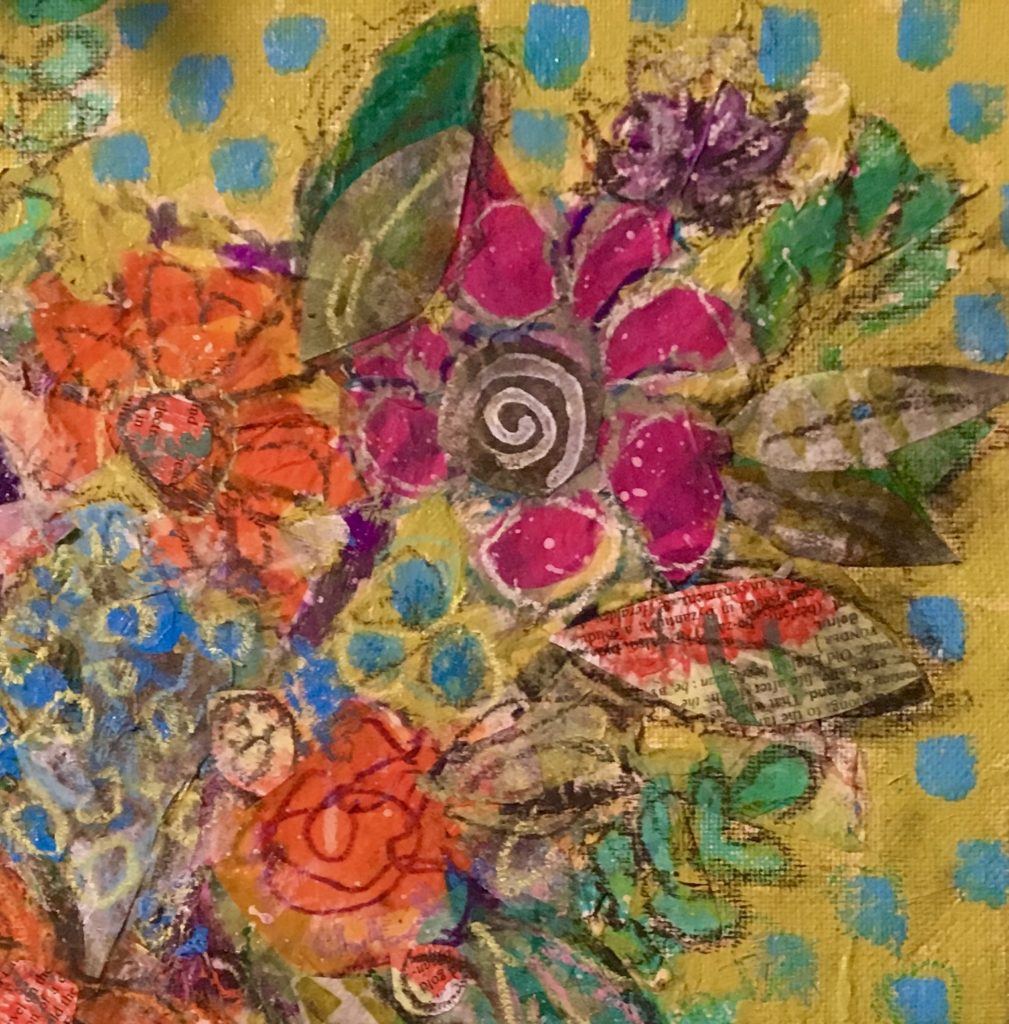
So we mapped it out, from the music  (Barbra Streisand songs, including “Second-hand Rose,” since she was a passionate Goodwill shopper, and Klezmer tunes, which she’d grown up with in an orthodox Jewish home) to the food she enjoyed most (deli sandwiches from TooJay’s). With a loud guffaw, she suggested invites that said, “No gifts, necessary,” but lots of balloons. And in typical fashion, she cautioned against anything maudlin or sentimental, just wanting people to tell stories of the good times they’d shared.

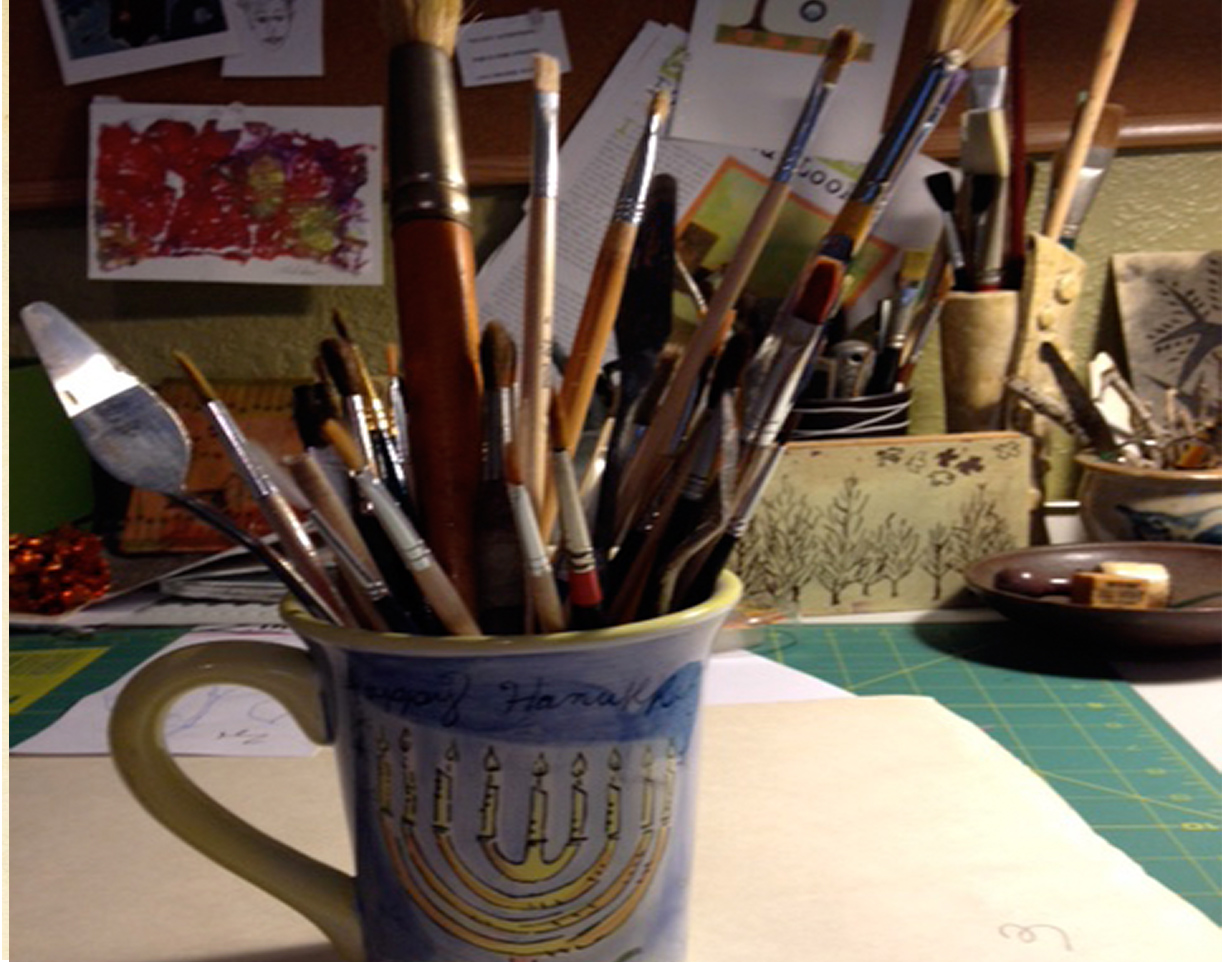
When the time came, it turned out to be the perfect celebration of her life, filled with laughter, tears and memorable moments. As a final tribute, each guest was given one of her well-worn paintbrushes with a small tag attached that read:

In memory of Sally D

May 4, 1922-March 28, 2013

“The essence of all beautiful art is gratitude.” – Nietzsche

—————————-

My mother taught all of us about love, friendship, and the importance of being thankful in our everyday lives. To honor her amazing spirit, why not take a moment to leave a comment acknowledging what you are grateful for. She would have loved that.


Sharing The Hospice Experience

Encountering the Edge_front

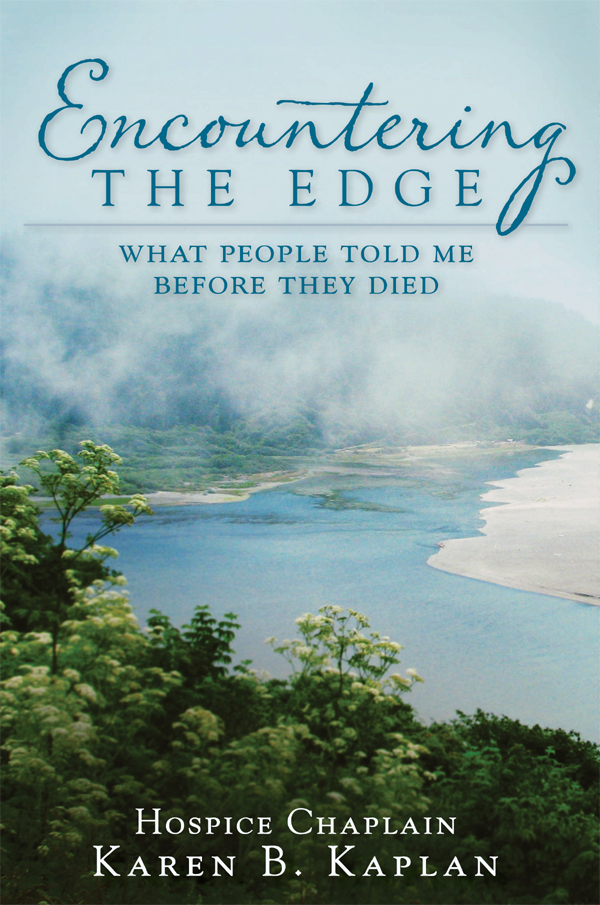
Despite the fact that none of us gets out of this world alive, generally speaking we’re uncomfortable with the concepts of death and dying. In her book, Encountering the Edge: What People Told Me Before They Died, Karen Kaplan, an ordained rabbi and board certified chaplain, demystifies the process by talking about her experiences with hospice clients of all ages and denominations. Listening as they share their stories, their hopes and their fears, she offers the powerful gift of being heard, with warmth, gentle humor and deep compassion.  Below is an excerpt:

_________________________

As you accompany me to my patients, you may find yourself throwing various assumptions overboard. Such as when I sing to them, you might think I only sing sweet and religious songs like “Swing Low Sweet Chariot,” or “Kumbaya, My Lord,” or something based on the Psalms such as “May the Words of My Mouth.” Sam, twenty-eight years old and formerly a policeman, was one of the youngest residents in a nursing home relatively near my office; he was there on account of a disease that was stealthily stealing his motor abilities. Almost every time I stopped in, he gave me a broad delighted smile. But he decidedly did not want to hear a “girlie” thing like a hymn, though his mother did. She visited him at the nursing home practically every day to patiently feed him lunch served along with her cheery and loving talk. I often saw her during my weekly visits, and because she found my hymns soothing, I sang them for her benefit when she was around. She kept requesting them every time our visits coincided, although she had a thing or two to say to God due to the disease that was destroying her son. Sam, as I implied before, was not ambivalent about religion. He simply was not on board with it, so I tried to think of something nonreligious to sing. I had recently found out that one of the things Sam missed a lot at the nursing home was beer. Since I could not quickly arrange to have it made available (this would have required a doctor’s order), I thought a song about such beverages might raise his spirits at least in part. So I energetically sang “What Do You Do with a Drunken Sailor,” “Ninety-Nine Bottles of Beer,” and “In Heaven There Is No Beer.” All of these elicited his distinctive lingering smile. On subsequent visits, when I asked if he wanted to hear these again, he formed an even longer-lasting smile and said, “Sure!” Even his mom allowed herself a grin. At later visits when he could no longer indicate what he wanted to hear, his smile acted as confirmation.

One of Sam’s dying wishes was to get a tattoo showing his police rank and years of service. Given his condition, the procedure would have been painful, but his response was, in his soft high-pitched voice, “I’m tough.” Unfortunately, this was complicated to arrange. For one thing, he was not strong enough to leave the nursing home to appear at the tattoo parlor. There was some talk of getting a tattoo artist to make a house call, but by then, Sam was too weak to endure getting the tattoo. Soon after his disease had progressed to that stage, my husband Steve and I saw a performance of Hawaiian hula dancers, and I noticed that they had tattoos—not the kind we typically think of with pictures of hearts and arrows and letters, but of geometric shapes. One of the Hawaiian performers explained that their tattoos signify such matters as family connections and position in the social hierarchy. The higher the rank, the more elaborate and more numerous the designs. I thought of Sam, who wanted us to read his epitaph on his skin, proclaiming who he was and what he had achieved.

_________________________

karenphoto

Ordained in 1992, Karen was among the first 200 female rabbis worldwide. In 2007 she became a board certified chaplain and served hospices for seven years. Her goal in writing Encountering The Edge: What People Told Me Before They Died,  and her blog, offbeat compassion, is to provide a gentle entree to a forbidding yet mesmerizing subject. The book is available on Amazon in softcover, a Kindle version, and now as an audiobook, which can also be purchased on audible.com.